

Siena Maxwell
In our June editions of Après TFS, we caught up with AI & Robotics Researcher and Incoming Robotics Grad at Carnegie Mellon, Andrew Magnuson ’21
TFS: Please describe the path you took after TFS.
ANDREW MAGNUSON: After graduating from TFS, I went into Engineering Science in AI and Robotics at the University of Toronto. That path began during my time at TFS, as I always had a passion for programming, robotics and building things like video games and AI systems. That was kind of my thing while I was at TFS.
Engineering Science proved to be a transformative experience for me. The first couple of years were outside my comfort zone and it was difficult, but the intensity and breadth actually reminded me a lot of the IB at TFS.
Now I’m heading into a master’s in robotics at Carnegie Mellon University. Robotics is incredibly interdisciplinary. You have modelling, mechanical design, simulation, machine learning, computer vision and language all coming together, plus the ethical and societal side of how these systems interact with people. That kind of interdisciplinary thinking was something I was exposed to early at TFS, and I think it shaped the path I’m on now.
My interest in AI and robotics started very early. When I was around eight years old, I saw Honda’s ASIMO robot at the Ontario Science Centre. I remember thinking it was the coolest thing I’d ever seen, even though I was disappointed it wasn’t as advanced as the robots in cartoons. But that sparked something for me. I realized that by the time I was older, the technology would be much better, and I wanted to be part of building it. That ended up being surprisingly accurate timing; AI for robotics, language and images has progressed massively in the last decade.
TFS: What does a typical day look like for you?
ANDREW MAGNUSON: The last five years have been a blend of classes, independent learning, mentorship and projects. I spend a lot of time focused on my studies, but I’ve also always believed that some of the most significant learning happens outside the classroom. In the real world, nobody is going to hand-hold you through learning something new. You have to read papers, explore ideas and figure things out yourself.
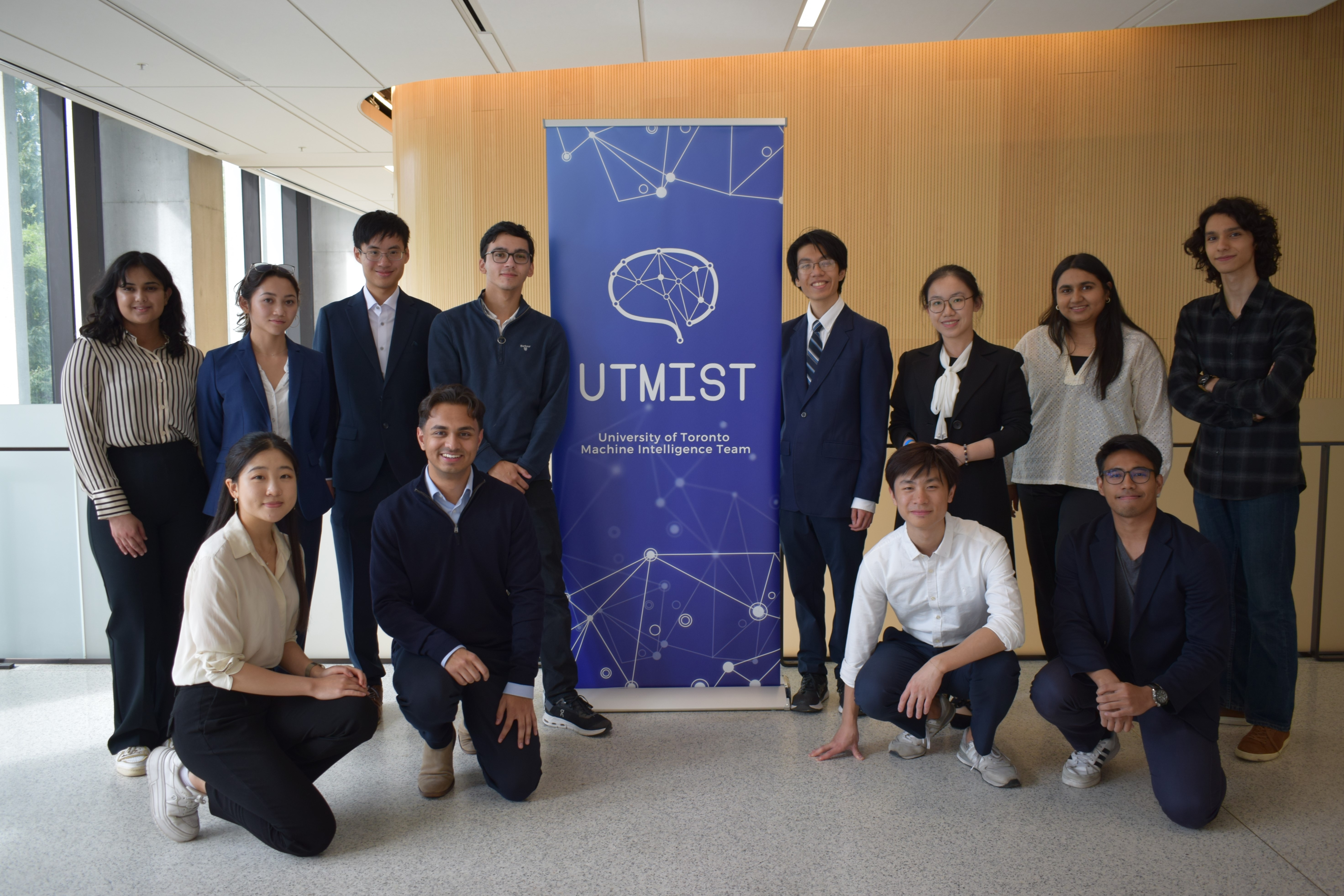
Alongside my coursework, I became co-president of one of the largest AI student clubs in North America at U of T (UTMIST). Through that, we mentored more than 2,000 students, organized Canada’s largest generative AI hackathon, hosted workshops and speakers, and ran student projects in collaboration with companies.
At the same time, I also built a YouTube channel called AI Warehouse, which now has over 823,000 subscribers and more than 94 million views. The channel teaches people about AI and robotics through characters and storytelling. We use a robot named Albert as the main character and create videos where robots play games like dodgeball or hide-and-seek while also explaining concepts in robotics and reinforcement learning. So, a typical day is usually some combination of classes, working on research projects, and managing the channel.
TFS: What gives you the most satisfaction in your work?
ANDREW MAGNUSON: I think there are two parts to it. The first is getting closer to the frontier of what’s possible. Ever since I was a kid learning how to program with Lego Mindstorms kits, I’ve always wanted to push myself toward difficult and important technical problems. Now, through my graduate work, I’m getting much closer to that frontier, which is really exciting.
The second part is the people. Through UTMIST and other mentorship work, I’ve met students from all kinds of backgrounds who are excited about these technologies. Some of them started with very little experience and are now doing incredible things, such as working in drug discovery, aerospace engineering or designing robotic hands. Seeing that growth and getting to support people along the way is really rewarding!
That’s also part of why I’ve stayed involved with TFS as an alum. I recently came back to speak at an AI conference hosted at the school. Instead of giving a highly technical presentation, I focused more on encouraging students to pursue interests outside the classroom and not be afraid to learn independently. I think students are often much more capable than we give them credit for. If someone is passionate about a highly complex subject in Grade 8, why not encourage that ambition? Being able to support students who are discovering those interests is meaningful to me.
TFS: How did your experience at TFS help you get to where you are now?
ANDREW MAGNUSON: The IB program was probably the closest preparation for the work I’m doing now. The internal assessments, extended essays and research-based projects taught me how to think critically, write academically and approach complex problems. I also appreciated the breadth of the program. I focused heavily on STEM subjects, but the humanities and arts courses were equally valuable. English, French, economics and music all helped build perspective.
I think it’s very important not to build things in a vacuum. Technology exists within social, political and ethical contexts, and this is sometimes shrugged off in STEM. At TFS, courses like Theory of Knowledge encouraged us to think critically about those broader impacts and ethics. That perspective has stayed with me as I’ve gone further into my engineering degree.
TFS: How has French language and bilingualism impacted your career?
ANDREW MAGNUSON: It’s hard to know exactly what my life would look like without it, but I think bilingualism helped build my curiosity about language and culture more broadly. At TFS, I spent a lot of time interacting with teachers and people from different backgrounds, and that made me much more comfortable communicating across cultures. Later at U of T, I became interested in applied linguistics and even spent the last couple of years learning Anishinaabemowin, an Indigenous language of Canada. I find language fascinating because it shapes how people think about the world. Different languages approach concepts like direction, identity and relationships in completely different ways. That’s especially interesting in robotics and AI, where communication and language understanding are critical challenges.
TFS: What skills or lessons from TFS do you find yourself applying most often in your work?
ANDREW MAGNUSON: Being multidisciplinary has been crucial for my work and that began at TFS. We were encouraged to develop broadly, not just academically but creatively as well. Music was a big part of my experience, through the Senior Wind Ensemble and working with teachers like Mr. AJ and Mr. Price. I still spend a lot of time making music today. I don’t directly apply music to robotics research, but I think it helps keep me balanced. If I only focused on technology all day, I’d lose an important part of myself. Having creative outlets makes me better at my work because it helps me stay curious and well-rounded.
TFS: What was your most memorable experience at TFS?
ANDREW MAGNUSON: One memory that stands out was starting a computer science club with Mr. Ngongo. We were standing backstage before presenting the club at an assembly and trying to figure out what we were going to say. I was nervous, and then right as we went onstage, he grabbed the microphone and said, “I am math. He is computer science. We are the best club ever.” It completely broke the tension and everyone loved it. It was such a funny and memorable moment, and such a great way to start the club.
TFS: What advice would you give to current students?
ANDREW MAGNUSON: Don't try to derive who you are from what you think you should be. Figure out what interests you by actually trying things. We live in a time where information is so accessible. If there’s something you’re curious about, you can go explore it. And if it feels difficult or intimidating, that’s okay.
The process of trying and failing is extremely important. I failed constantly while learning game development and programming when I was younger. But through that process, I learned what I genuinely enjoyed and what I wanted to keep pursuing. So don’t be afraid to fail, pivot or change direction. Some of the most valuable experiences come from trying things that don’t work out exactly as planned.
TFS: What do you wish you had known while at TFS that could have better prepared you for life after graduation?
ANDREW MAGNUSON: I think just be confident in yourself. And be confident around others. Networking sounds cliché, but relationships and mentorship are important. Over the last year especially, I’ve made a real effort to connect with people working in my field, and it’s completely changed the opportunities available to me. I’ve spoken with researchers from companies like NVIDIA and OpenAI, visited conferences and built friendships with people doing incredible work in the field. Most people are much more willing to help than you think they are because they were once in the exact same position. Reaching out, asking questions and building relationships isn’t bothering people. It’s how people learn and grow together.